Gemini Hackathon Post-Mortem: Lessons for Next Time
Built a working voice AI demo in 7 hours. Here's what I learned about hackathon strategy.
Quick Context
Night before: Reviewed past winners with teammates. Planned prediction markets project. 12am discovered track themes exist.

Morning chaos:

- Left JB at 7am, reached Google office 8am
- Teammates rejected at entry (didn't register individually)
- Niels: "FOUNDERS MODE!" - used rejection as motivation
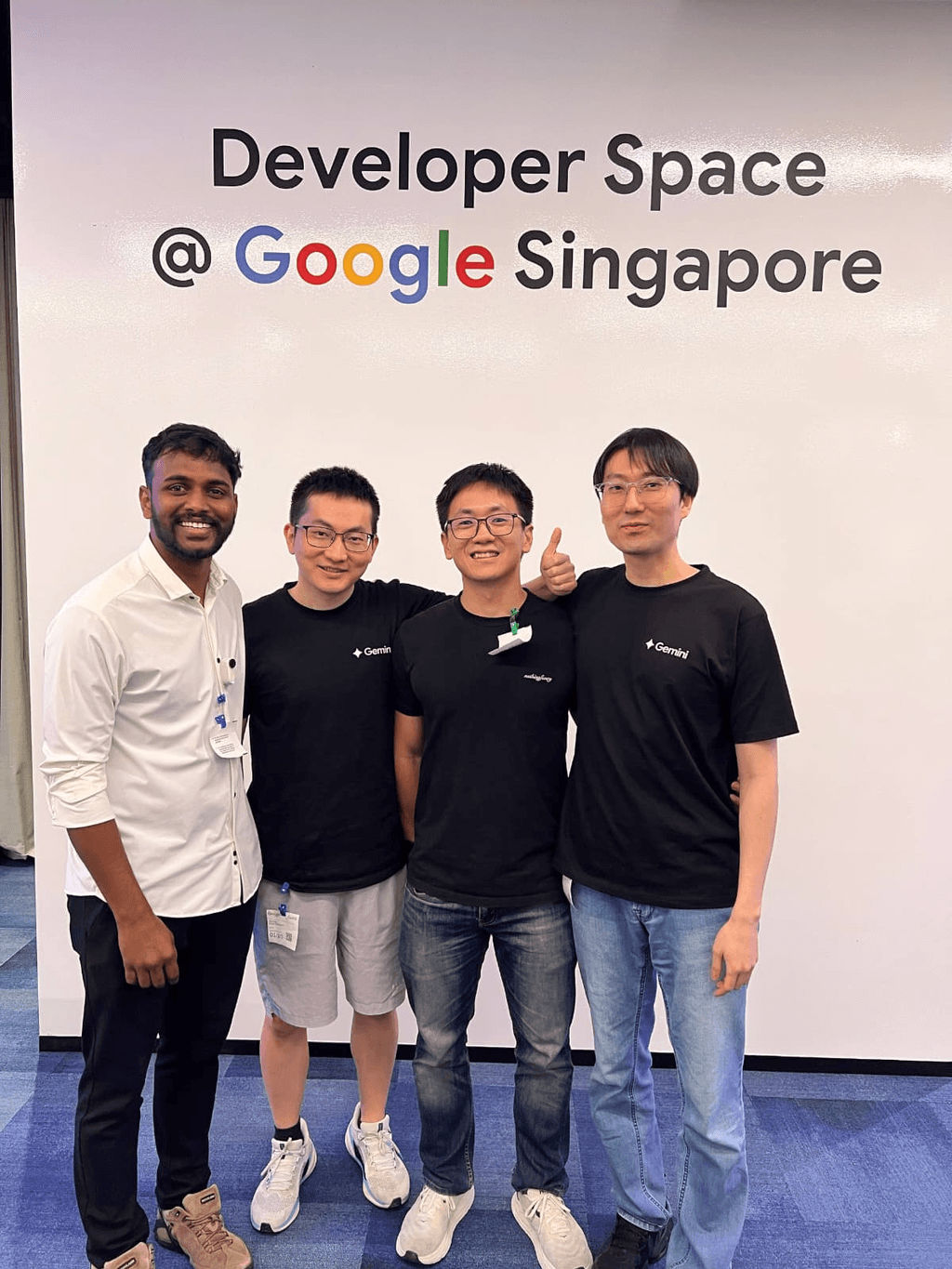
- Got in eventually. Drained before we started.

Setup failures:
- No breakfast, no table, no seat
- WiFi wouldn't connect → couldn't claim API credits
- Lost first hour to logistics instead of building
End of day failure:
- Left only 20 mins for video recording AND deployment
- Didn't know how to use my video tool
- Tried to host to Cloud Run in the same 20 mins
- Submitted with no demo video
What I Built
Meeting Prep Agent - Voice-triggered briefings before meetings
"Prepare me for my next meeting"
  ↓
Research attendee (Google Search)
  ↓
Generate bio card
  ↓
Voice briefing
  ↓
"Send confirmation email?"
Deployed to Cloud Run. Working demo. Only one who shipped.
Vision vs Execution (40% Shipped)
The idea was S-tier. The execution was B-tier. Here's what I planned vs what I actually built:
What shipped:
- ✅ Voice Output (TTS) - Google Cloud TTS works
- ✅ Function Calling - Gemini orchestration works
- ✅ Web Research - Serper API integration works
What didn't:
- ❌ Calendar Monitoring - Mock data, no real Google Calendar OAuth
- ❌ Gmail History - Mock JSON, no OAuth
- ❌ Bio Card (Nano Banana) - Didn't implement image generation
- ❌ Proactive Triggers - User-initiated only, not "before you ask"
- ❌ Send Email Action - Demo shows it, doesn't actually send
- ⚠️ Voice Input - Web Speech API fallback, not Gemini Live
Execution rate: ~40%
The Bigger Vision I Had
Not just meeting prep - a mentor/coach that:
- Tracks your goals across relationships over time
- Remembers what you committed to in past meetings
- Suggests strategic asks ("You've met Sarah 4x. Ask for the intro this time.")
- Proactively briefs you before you even open your calendar
This is fundamentally different from Gong/Fireflies. It's a relationship operating system, not a meeting recorder.
The problem wasn't the idea. It was 7 hours.
Product Instinct vs Hackathon Instinct
I kept envisioning a real user the entire time. How would someone use this? What would make them say "this is useful"? I optimized for immediate user benefit, not judge impression.
Different game, different rules. Good to know for next time.
Gap to S-Tier
Here's why I ranked Tier B-:
- Tools Used: 5 vs 25+ (Neuroflix)
- Architecture: Single agent, vanilla JS vs Multi-agent orchestration
- Demo: No video vs Full production video
- Novel Tech: API wrapper vs EmergentDB's custom algorithm in Rust
- Engineering: No tests, flat files vs TypeScript, CI/CD, Vitest
What S-Tier Had That I Didn't
- Breadth over depth - Winners showcased MORE Google tools, not deeper integration
- Multi-agent systems - Neuroflix had 8 specialized agents (Director, Scriptwriter, Editor...)
- Demo video - Judges watch videos, not live demos
- Novel algorithm - EmergentDB invented MAP-Elites for vector search. I assembled APIs.
- Enterprise architecture - EarthLinks had TypeScript + tests + CI/CD
The Takeaway
Hackathons and products optimize for different things.
Hackathon success factors:
- Tool breadth over depth
- Video polish matters as much as code
- Demo storytelling is a core skill
Next Time Checklist
Before the Event (Race Day Rules)
Like a marathon - don't wear new shoes on race day. All setup done BEFORE:
- [ ] API credits claimed and tested
- [ ] All tools familiar (no learning during competition)
- [ ] Video recording tool practiced (I didn't know how to use mine)
- [ ] Hosting/deployment pipeline ready (don't deploy on deadline)
- [ ] Fallback data prepped in case APIs fail
- [ ] Demo script outline drafted
Day Of
- [ ] Write the 60-second demo script FIRST
- [ ] Work backwards from demo to code
- [ ] Use ONLY familiar tools (Claude Code > AI Studio)
- [ ] Scope down until embarrassingly simple
- [ ] Allocate last 2 hours for VIDEO, not features
What Wins
- [ ] Maximize tool count (breadth > depth)
- [ ] Multi-agent > single agent
- [ ] Polished video > working code
- [ ] Novel algorithm > API wrapper
- [ ] Memorable demo moment > practical utility
